.png)
"Insomnia: Why Are We Tired but Still Unable to Sleep?"

You have been tired since three o'clock. You yawned through the drive home, through dinner, and through the last episode you promised yourself you would not watch. Then the lights go off, and your mind switches on.
If this sounds familiar, you are not imagining it, and you are not alone. Feeling exhausted yet unable to sleep is one of the most common complaints people bring to doctors and therapists. The good news is that it makes sense once you understand what is happening, and it is very often something that can be changed.
In short: you can feel tired but be unable to sleep because tiredness and alertness are controlled by different systems. The longer you are awake, the more "sleep pressure" builds. But stress keeps the brain and body in an alert state that can override that pressure. Sleep needs both enough tiredness and a mind that feels it is safe to stand down.
Two Systems, One Pillow
In 1982, the Swiss sleep researcher Alexander Borbély described what became known as the two-process model of sleep. One process is sleep pressure, which builds steadily the longer we are awake. The other is our internal body clock, the daily rhythm that tells the body when it is night.
The model shows us that being tired is only half the equation. Layered on top is arousal: the brain's state of alertness. When the day has been full of pressure, unfinished tasks and constant input, that alertness does not simply disappear at bedtime. The body is tired. The mind is still on duty.
This is why "just go to bed earlier" so often fails. Going to bed earlier does not tell the alert mind that the day is over.
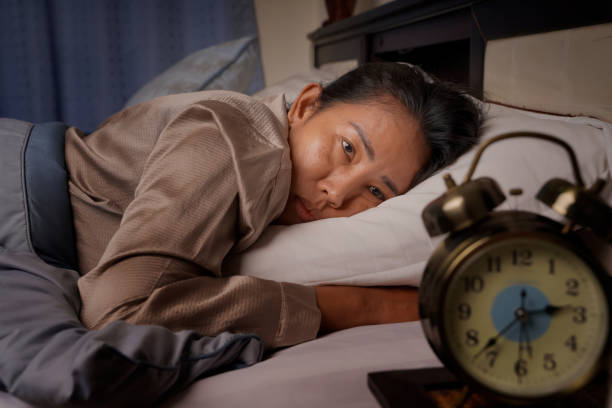
The Malaysian Night
Look at how many of us now end our days. Long commutes through traffic. Late dinners. Work WhatsApp groups that stay active long after office hours. A last look at the news, the family chat, the email that "just needs a quick reply".
None of these is dramatic on its own. Together, they mean many of us carry the whole day into bed with us and never give the mind a clear signal that it can rest.
Why Trying Harder Makes It Worse
There is a cruel twist to sleeplessness: the harder you try to sleep, the more awake you become. The psychologist Allison Harvey described this in her influential cognitive model of insomnia. People who struggle to sleep tend to worry about not sleeping, watch themselves closely for signs of wakefulness, and predict a terrible day tomorrow.
Each of these keeps the alert system running. Sleep, it turns out, is something that happens when we stop pursuing it.
This is an important reframe. Sleeplessness is not a failure of willpower. It is a learned pattern between the mind and the body, and anything that we learn can be unlearned.
What Actually Helps
Start with the evidence. International guidelines, including those from the UK's National Institute for Health and Care Excellence (NICE) and the American College of Physicians, recommend cognitive behavioural therapy for insomnia (CBT-I) as the first-line treatment for long-term sleeplessness. It works on the habits and beliefs that keep the alert system running.
Small changes that respect how the mind works:
Close the day on paper.
A 2018 sleep-laboratory study found that people who wrote a short to-do list before bed fell asleep faster than those who wrote about tasks already completed. Writing it down tells the mind it does not need to keep holding it.
Protect the last half hour.
Keep it free of work messages and news. Screen light plays a part, but what you read often matters more.
Get up if you cannot sleep.
If you have been lying awake for what feels like twenty minutes or more, go to another room and do something quiet until you feel sleepy. This stops the bed from becoming a place for worrying.
Where Clinical Hypnosis Fits
Clinical hypnosis is a state of focused attention in which the body relaxes and the mind becomes more responsive to helpful suggestion. It is not sleep, and you remain aware and in control throughout.
That makes it well suited to the "wired" half of tired-but-wired. Research suggests hypnosis can improve how well people feel they sleep, though its effect on objectively measured sleep is less consistent. In practice, it works best alongside other approaches, not as a stand-alone cure. A trained clinical hypnotherapist may use it to:
• Calm the body's alert response before bed;
• Loosen the cycle of worrying about sleep;
• Teach self-hypnosis so the person has a tool they can use themselves every night.
That last point matters most to us. The goal is not dependence on a therapist. It is a person who understands their own mind well enough to help it settle.

When to See Someone
Occasional bad nights are part of life. It is worth speaking to a professional if:
• You have difficulty sleeping three or more nights a week, and it has gone on for three months or longer;
• It is affecting your mood, concentration or relationships.
• You snore heavily, wake gasping, or feel unrefreshed however long you sleep. See a doctor first in this case, as these can be signs of a medical sleep disorder.
If you would like to talk to a qualified therapist, the LSCCH Therapy Centre offers sessions in Petaling Jaya and online.
Understanding Your Own Mind
At LCCH Asia, we believe that understanding the mind is not only for therapists. Every one of us lives with a mind that shapes how we sleep, how we work and how we love. Learning how it works is one of the most practical things a person can do.
Our Foundation Certificate in Clinical Hypnotherapy begins exactly there: stress, self-hypnosis and how the mind responds to suggestion. Many students join for themselves and discover they want to help others too.
Because rest is not a reward we earn at the end of the day. It is something the mind can learn again.

Frequently Asked Questions (FAQ)
Why am I tired but cannot sleep at night?
Tiredness and alertness are controlled by different systems. Stress can keep the brain alert even when sleep pressure is high, so you feel exhausted, but your mind will not switch off.
Can hypnosis cure insomnia?
No responsible practitioner would promise a cure. Research suggests clinical hypnosis can improve perceived sleep quality and help with the stress and worry that keep people awake. It is most useful alongside approaches such as CBT for insomnia.
Is self-hypnosis safe to use for sleep?
For most people, yes. Self-hypnosis is a relaxed, focused state in which you remain in control. If you have a mental health condition or are under medical care, speak to a qualified professional first.
How long does insomnia have to last before I seek help?
If poor sleep happens three or more nights a week for three months or more, or is affecting your daily life, it is worth speaking to a doctor or therapist.


