.png)
The Power of Intuition: Should You Trust Your Gut?

Updated: Sep 24, 2025

The simple answer is yes, you should trust it. But like any skill, it needs to be developed. Our modern world often prioritises analytical thinking, causing us to neglect our intuitive abilities. The most successful people, from business leaders to medical experts, have learned to harness both their rational and intuitive minds to make smarter, faster decisions.
The Science Behind Your Gut Feeling
Intuition isn’t a magical or mystical ability; it's a sophisticated psychological and neurological process. It is a form of rapid, non-conscious information processing where the brain uses past experiences, knowledge, and cues from both the environment and our own bodies to make a decision. The process is so fast that it doesn’t register at a conscious level, presenting itself instead as a feeling or a 'hunch'.
The Two-System Brain: Psychological research has often described two distinct systems of thought. System 1 is our intuitive mind: fast, automatic, and emotional. It operates in the background, drawing on a lifetime of learned patterns. System 2 is our rational mind: slow, deliberate, and logical. When you make a decision based on a pro/con list, you are using System 2. When you get a "gut feeling" about a new acquaintance, you're relying on System 1.
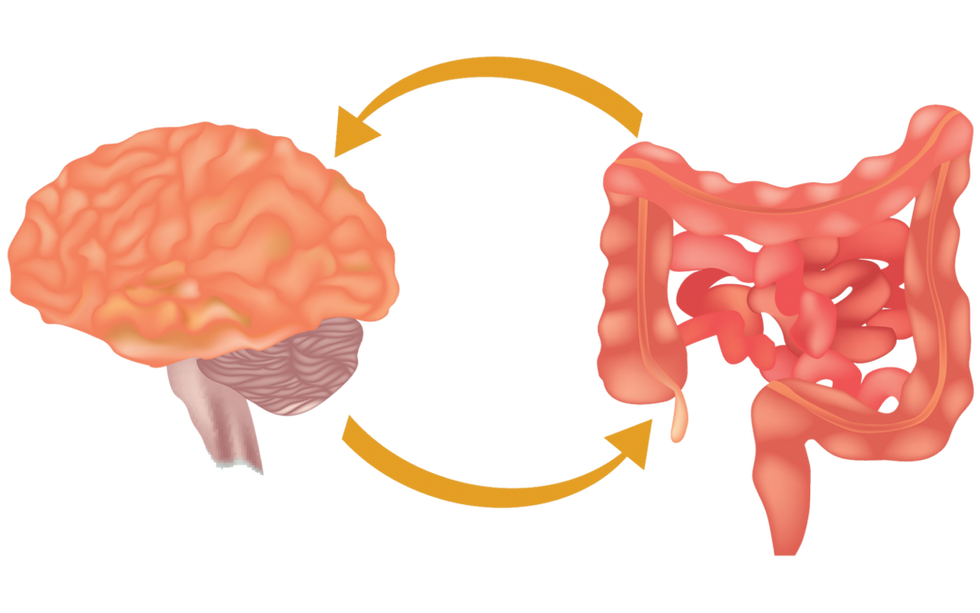
The Gut-Brain Connection: The phrase "gut feeling" has a surprising scientific basis. The gut is lined with an extensive network of neurons, often referred to as the "second brain." Known as the enteric nervous system (ENS), this network has over 100 million neurons, and it communicates directly with the brain via the vagus nerve. The sensations you feel in your stomach—butterflies, a sense of dread, or calm—are often the physical manifestation of your intuition. Your body is quite literally giving you a signal.
The Role of Emotion: Intuition is deeply intertwined with emotions. Our brains encode past experiences with emotional markers. When you encounter a similar situation, your brain quickly accesses these emotional memories. The "unconscious information" from these experiences is what provides the rich, non-verbal insight that forms the basis of your intuition. This is why paying attention to your body and your feelings is the key to unlocking its power.
Can You Always Trust Your Intuition?
Just because intuition is powerful, it does not mean it is infallible. It is not an oracle, and it can be clouded by a number of factors, including:
Emotional State: When you're stressed, anxious, or overwhelmed, your 'gut feelings' are more likely to be a reflection of your emotional state rather than a clear intuitive insight.
Cognitive Biases: Intuition is a form of pattern recognition, but it can be prone to biases from negative past experiences or a lack of relevant information. What you perceive as a "red flag" might be a misinterpretation based on an unrelated event.
Lack of Expertise: Your intuition is only as good as the information it has to draw from. A seasoned medical professional can make an intuitive diagnosis because their subconscious has processed years of clinical experience. An amateur cannot.
Effective intuition, just like effective thinking, is a skill that needs cultivation. You must learn to distinguish between genuine intuitive insight and emotional noise or irrational fears.
The Secret Language of Your Intuition: Practical Steps to Cultivate It

Learning to listen to your intuition is like learning a new language. You have to understand its vocabulary, which is spoken through your body and feelings.
Learning to Listen (Mindfulness): The first step is to become a non-judgmental observer of your own mental and physical processes. Pay attention to your thoughts, emotions, and physical sensations without labelling them as good or bad. Are you feeling a surge of excitement when thinking about a decision, or is there a tight knot in your stomach? Practices like mindfulness meditation can help you become more attuned to these signals.
Trusting Your Gut Feeling: When you notice a physical sensation in your stomach or body, pause and ask yourself what it might be telling you. The enteric nervous system is a powerful source of information, and paying attention to its signals can provide profound insights.
Understanding Your Emotions: Intuition uses body sensations to communicate—goosebumps, a shiver down your spine, a racing heart, or a change in your breathing. Acknowledge and explore these feelings. Over time, you will learn to distinguish a clear, enriching insight from the heavy, draining feeling of anxiety.
Communicating with Your Unconscious: The best way to connect with your unconscious mind is through a state of relaxation and open-mindedness. This can be achieved through creative activities, daydreaming, or even self-hypnosis. These practices quiet the conscious mind and allow the 'secret language' of your intuition to emerge.
Reflecting and Journaling: After a decision, take a moment to reflect on what you did and how it felt. Did your intuition serve you well? Did you ignore it, and what was the outcome? This feedback loop helps you build a stronger, more reliable intuitive sense.
Learning to listen to your intuition is like meeting an old friend you haven't seen for a while. It feels safe, welcoming, and reassuring. It's not about abandoning logic; it's about integrating both your conscious and unconscious processes. When you use both, you're more likely to feel centred, arrive at accurate decisions, and feel more in touch with your true self.


